Why Flower Borders Are Garden Magic ✨
Flower borders are the unsung heroes of beautiful gardens. Like a pretty frame around a family photo, they add charm and definition that makes everything look more polished and purposeful.
The best part? You don’t need a mansion or professional landscaper to create this timeless look. Flower borders work their magic in spaces large and small, adding structure and softness in just the right balance.
There’s something so inviting about a home with thoughtfully planted front yard flower borders that welcome you with charm and structure. They whisper “welcome” before you even reach the door!
Ready to give your yard that vintage, lived-in charm that makes a house feel like a beloved home? Let’s explore 10 flower border ideas that bring instant curb appeal with that perfect touch of yesteryear magic.
1. Layered Cottage-Style Planting (Tall to Low) 🌿
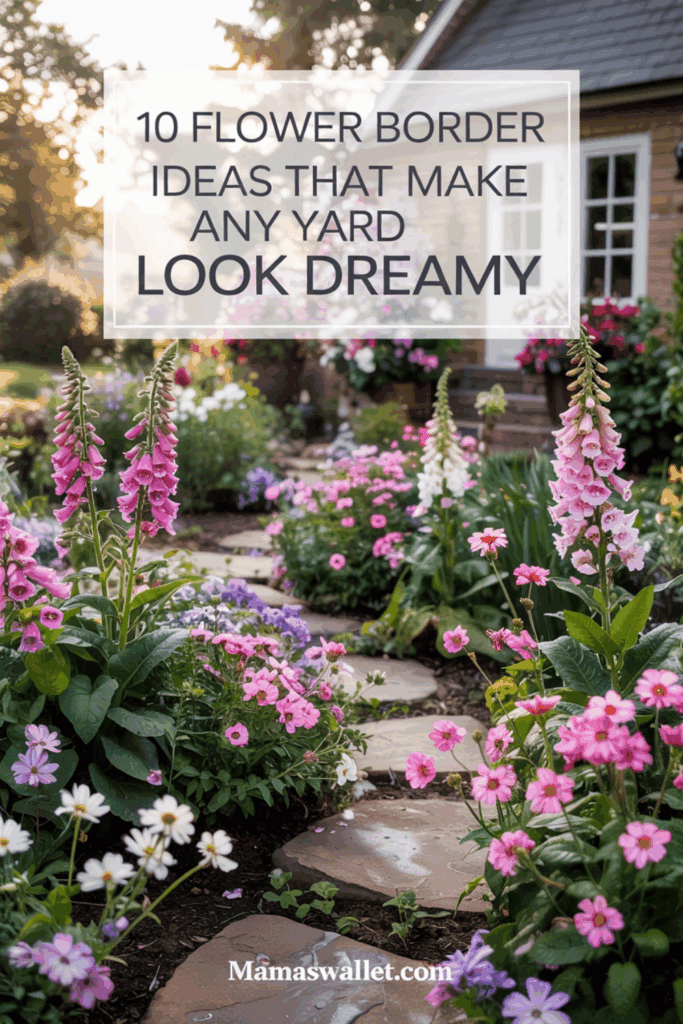
One of the most timeless flower border ideas is the classic cottage garden layout that follows a simple but magical formula: tall plants in back, medium-height in the middle, and low-growing flowers in front.
This creates a lush, abundant look that feels both designed and delightfully untamed.
Picture foxglove and hollyhocks swaying gently in the back row, cheerful daisies and coneflowers filling the middle, and sweet alyssum or forget-me-nots creating a soft edge along the front.
Perfect Plants for Layered Borders:
| Back Row (3-4 ft+) | Middle Section (1-3 ft) | Front Edge (under 1 ft) |
|---|---|---|
| Foxglove | Black-eyed Susans | Sweet Alyssum |
| Hollyhocks | Shasta Daisies | Creeping Thyme |
| Delphinium | Salvia | Forget-me-nots |
| Russian Sage | Coreopsis | Creeping Phlox |
💡 Pro Tip: When planting, place taller varieties slightly closer together than recommended on the plant tag, and shorter plants a bit further apart. This creates that perfect cottage garden look where plants mingle and support each other naturally.
This layered approach not only looks beautiful but also keeps your flower bed borders healthy, with taller plants creating shade and ground covers suppressing weeds.
2. Brick or Stone Edging for That Old-World Feel 🧱
Nothing says ‘this garden has been loved for generations’ quite like classic garden edging ideas using brick or stone to define your flower border.
This one addition instantly elevates your plantings from “just flowers” to “garden design.”
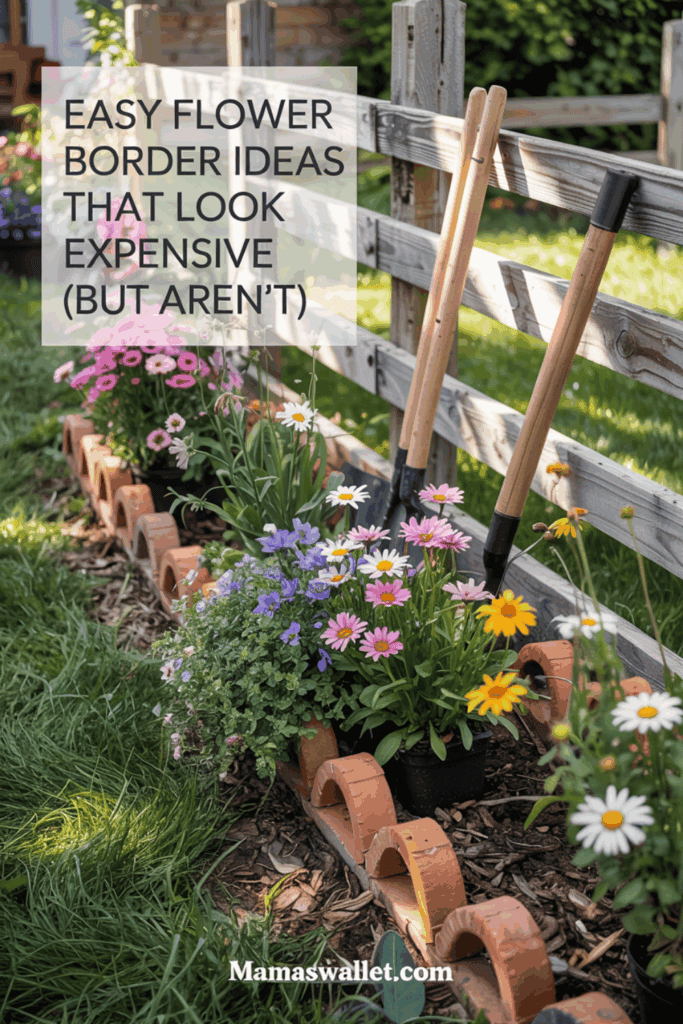
Reclaimed red brick laid in a simple row creates that perfect English cottage vibe, while stacked fieldstones bring a more rustic, countryside feel. Even something as simple as large river stones placed end-to-end adds wonderful structure.
Edging Materials with Vintage Charm:
- Antique brick salvaged from old buildings
- Weathered cobblestones with moss growing between
- Locally gathered fieldstones in varying sizes
- Terra cotta roof tiles repurposed as edging
❓ Did You Know? Many cities have architectural salvage yards where you can find old bricks, stones, and other materials at affordable prices. These weathered materials bring instant character that new materials simply can’t match!
The best part about adding edging? It clearly defines where garden ends and lawn begins, making maintenance easier while adding that crucial finishing touch that says “this garden was planned with love.”
3. Mixing Perennials with Heirloom Annuals 🌼
The secret to borders with that perfect vintage feel is mixing reliable perennials (plants that come back year after year) with charming heirloom annuals (one-season wonders that often self-seed).
Perennials like peonies, iris, and day lilies form the backbone of your border, while heirloom annuals like cosmos, zinnias, and love-in-a-mist fill in gaps with carefree color that changes each year.
Favorite Heirloom Annuals for Vintage Charm:
- Cosmos ‘Sensation Mix’ – tall, airy blooms in pink, white, and magenta
- Zinnias ‘Cut and Come Again’ – bright flowers that last all summer
- Bachelor’s Buttons – cornflower blue blooms with nostalgic appeal
- Sweet Peas – climbing vines with the most heavenly fragrance
🔍 Consider This: Look for seed companies that specialize in heirloom varieties like Baker Creek, Select Seeds, or Seed Savers Exchange. Their seeds produce flowers with authentic vintage forms and scents that modern hybrids often lack.
This perennial/annual mix gives you the best of both worlds—structure and playful color that makes your colorful flower borders feel fresh year after year.
4. Color Palettes That Feel Naturally Elegant 🎨
One of the biggest challenges for beginning gardeners is knowing which colors work well together. Luckily, vintage gardens follow a few simple palette patterns that are almost impossible to get wrong!
Classic Vintage Color Combinations:
| Palette Name | Colors | Flower Examples |
|---|---|---|
| Cottage Harmony | Purple, Yellow, White | Iris, Coreopsis, Daisies |
| Romantic Heirloom | Blush Pink, Burgundy, Silver | Peonies, Dahlias, Lamb’s Ear |
| Lavender Farm | Purple, Blue, White | Lavender, Delphinium, Baby’s Breath |
| Sunset Garden | Coral, Orange, Soft Yellow | Zinnia, Marigold, Yarrow |
💡 Pro Tip: Add silver or gray foliage plants like dusty miller, artemisia, or lamb’s ear to any color palette. These act as “neutrals” in the garden, making all other colors look more harmonious together.
Don’t worry about finding exact matches—soft and natural palettes work best in landscaping borders inspired by vintage gardens.
5. Using Salvaged Garden Tools as Decor 🧰

Nothing adds authentic vintage charm to a flower border quite like incorporating old garden tools and implements as decorative accents. These unexpected touches bring personality and a sense of history.
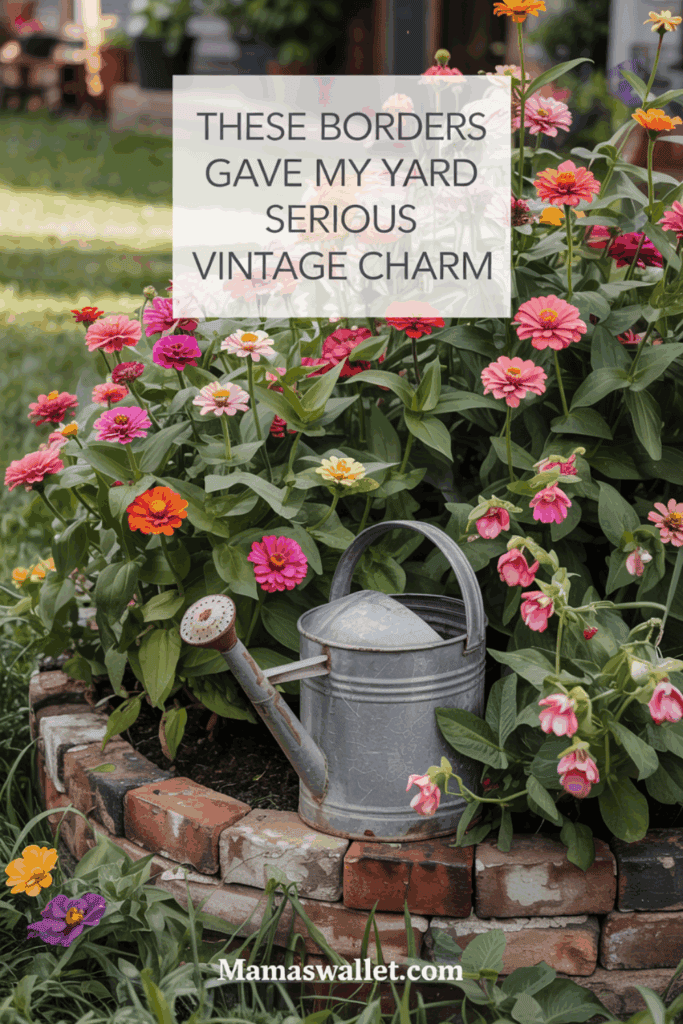
Imagine an antique hand plow nestled among coneflowers, a collection of rusty garden trowels hanging on a fence behind hollyhocks, or a weathered watering can serving as a planter for trailing lobelia.
Creative Ways to Use Vintage Tools:
- Lean an old wooden ladder against a fence as a plant stand
- Hang antique hand tools on a garden wall as “outdoor art”
- Position a vintage wheelbarrow as a movable planter
- Use old galvanized watering cans as containers for trailing plants
❓ Did You Know? Many vintage metal garden items develop a beautiful patina over time called “verdigris” – that blue-green layer that forms on copper, brass, and bronze. This natural aging process adds incredible character to your garden decor!
Thrift stores, flea markets, and even family barns are treasure troves for these perfect accents. The more weathered and worn, the better they’ll look nestled among your blooms!
6. Creating Seasonal Interest with Minimal Effort 🌷
The most enchanting vintage gardens look beautiful from February through November, with something always coming into bloom as other plants fade. This “relay race” of blooms is easier to achieve than you might think!
Plan your border with bloom times in mind: spring bulbs like daffodils and tulips, summer perennials like coneflowers and daisies, and fall bloomers like asters and mums. This creates a garden that’s always putting on a show.
Bloom Time Timeline:
| Season | Early | Mid | Late |
|---|---|---|---|
| Spring | Crocus, Snowdrops | Daffodils, Tulips | Allium, Columbine |
| Summer | Roses, Peonies | Daisies, Yarrow | Coneflowers, Black-eyed Susans |
| Fall | Sedum, Asters | Mums, Goldenrod | Japanese Anemone, Toad Lily |
🔍 Consider This: Include plants with interesting seed heads or berries for winter interest. Coneflowers, sedum, and ornamental grasses look beautiful with frost or snow on them, extending your garden’s beauty into the coldest months.
This layered approach to bloom times is one of the best backyard flower ideas to keep your space blooming from spring to fall.
7. Curved Borders vs. Straight Lines: What to Know 📏
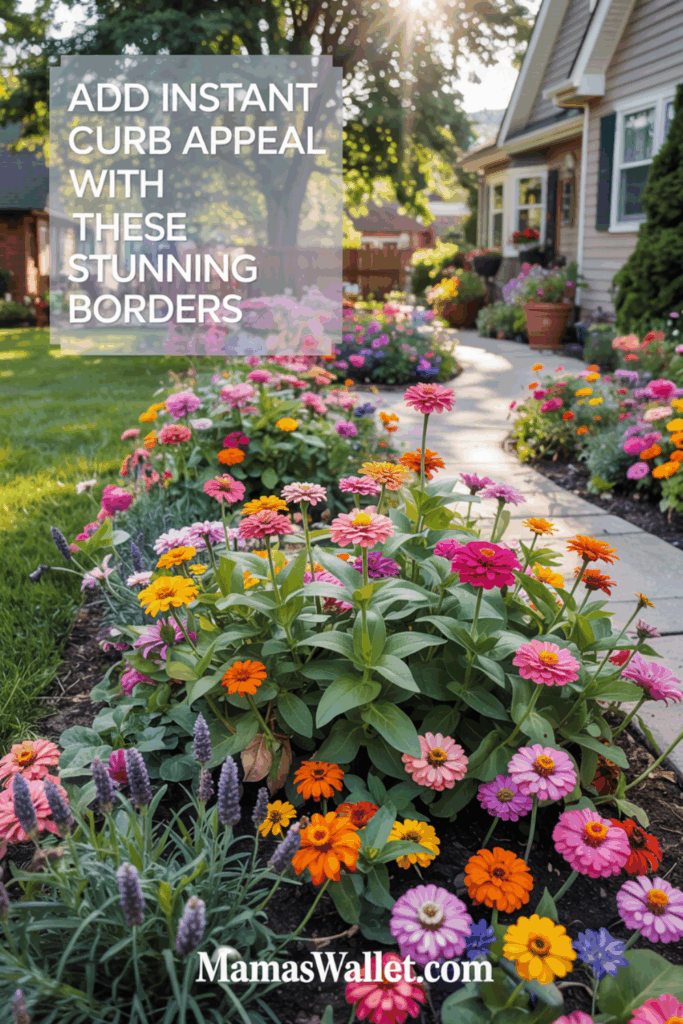
The shape of your flower border dramatically affects the feeling of your garden. Understanding the difference between curved and straight designs helps you choose what’s right for your space.
Curved borders create a soft, romantic feel that guides the eye along a gentle journey. They feel more natural and relaxed, perfect for cottage-style gardens where plants spill over edges in a casual way.
Straight-lined borders offer a more structured, formal look that brings a sense of order and intention. They’re wonderful for traditional homes, vegetable garden boundaries, or when you want a cleaner, more defined edge.
Choosing Your Border Shape:
- Curved borders work beautifully along property edges and in larger yards
- Straight borders look perfect against home foundations and fences
- Mixed approaches can work too – straight along structures, curved where borders meet lawn
- Consider your home’s architecture – match formal homes with more structured lines
💡 Pro Tip: Use a garden hose to lay out potential border shapes before digging. Leave it in place for a day or two and view it from different angles (especially from your home’s windows) to make sure you love the shape before making it permanent.
There’s no right or wrong choice—the best shape is the one that complements your home’s style and makes you smile when you see it.
Curved edges and straight lines each bring their own kind of charm—and both offer tons of garden border inspiration for creating a space that feels personal and polished.
8. Fencing Backdrops for Framing the Border 🏡
A low fence behind your flower border creates a perfect backdrop that makes colors pop while adding vintage charm and structural support for taller plants.
White picket fences create that classic American cottage look, while wrought iron brings European garden elegance. Even a simple lattice panel stained a soft color provides beautiful support for climbing plants.
Fence Styles for Vintage Border Backdrops:
- Classic white pickets (2-3 feet tall is perfect)
- Rustic split rail with chicken wire backing
- Antique wrought iron salvaged panels
- Willow or hazel woven sections for an English cottage feel
❓ Did You Know? In traditional cottage gardens, fences served multiple purposes – defining property lines, keeping animals out, and providing crucial support for tall or climbing plants that might otherwise flop over in summer storms.
The best border fences are low enough to see over but tall enough to create that perfect framing effect. Even a partial fence section can create a beautiful focal point that anchors your garden design.
9. DIY Mini Trellises from Vintage Materials 🪜
Vertical elements add important height and architectural interest to flower borders without taking up much ground space. Creating small trellises from repurposed materials adds both function and vintage charm.
Look for unexpected items to transform into plant supports:
- Old wooden crib sides or headboards
- Antique metal gates or architectural grates
- Weathered wooden ladders, especially library or orchard styles
- Iron bed frames with ornate details
These vertical elements not only support climbing plants like morning glories or clematis but also create instant focal points that draw the eye and add that collected-over-time feeling.
🔍 Consider This: Position your DIY trellises about ⅓ of the way back in your border rather than at the very back. This creates depth and allows you to plant both in front of and behind them for a more layered, established look.
Small trellises tucked throughout a border create magical moments of discovery as visitors notice climbing flowers reaching toward the sky, adding a vertical dimension to your garden design.
10. Adding Lighting for Twilight Garden Magic ✨
Gardens with vintage appeal shouldn’t disappear when the sun goes down! Thoughtful lighting extends your enjoyment into the evening hours while creating the most magical atmosphere.
Soft, warm lighting reminiscent of candles or gas lamps enhances the vintage feel while highlighting your beautiful plantings after dark:
- Solar copper stake lights tucked among plants
- String lights woven through fence backings
- Hurricane lanterns along pathways
- Repurposed vintage light fixtures made weather-safe
💡 Pro Tip: Choose lighting with a color temperature of 2700K (warm white) rather than cooler white or colored options. This mimics the golden glow of sunset and vintage lighting, enhancing the nostalgic feel of your garden.
Even a few strategically placed lights create a completely different garden experience after dark, transforming your border into an enchanted space that beckons you outside to enjoy summer evenings.
Final Thoughts: Growing Beauty One Border at a Time 🌸
Flower borders do more than just add curb appeal – they turn houses into homes and yards into personal sanctuaries. They welcome pollinators, create habitats for helpful garden creatures, and give us spaces to connect with nature’s rhythms.
The beauty of vintage-inspired borders is that they’re meant to evolve over time. Start small with just one section – perhaps 4-6 feet along your front walkway or beside your porch steps. Add plants gradually as budget allows and as you discover varieties that speak to your heart.
True vintage garden style can’t be installed in a weekend – it develops through seasons of care and attention, collecting plants and objects that have meaning. Each year, your border will become more established, more personal, and more beautiful.
I’d love to hear which of these vintage border ideas most inspires you! Save this post for your next garden planning session, and please share your own flower border transformations in the comments below.
 Español
  English